For gold, the carat measures purity: one carat is one twenty-fourth of pure gold in the alloy, so 24-carat is all gold and 18-carat is 18 parts gold to six parts of another metal such as copper or silver. The Perth Mint, which is owned by the Government of Western Australia, describes 24-carat gold as 99.99% pure and 22-carat as 91.7% pure.
The same word is used for diamonds and other gemstones, but there it is a unit of weight, not of purity. Spelling differs too: carat here, karat in the United States.
From parts in 24 to a percentage
The rule is a fraction, so each carat can be worked out by hand: divide the carat by 24. The Perth Mint lists gold jewellery by carat with a three-figure number beside each, shown in the last column.
| Carat | Parts gold in 24 | Gold by the fraction | The Perth Mint’s label |
|---|---|---|---|
| 9 | 9 ÷ 24 | 37.5% | 9k (375) |
| 14 | 14 ÷ 24 | 58.3% | 14k (585) |
| 18 | 18 ÷ 24 | 75% | 18k (750) |
| 22 | 22 ÷ 24 | 91.7% | 22k (916) |
| 24 | 24 ÷ 24 | 100% (the Perth Mint gives 99.99%) | 24k (999) |
Read as parts in a thousand, the labels line up closely with the fraction. Nine and 18 carat match it exactly: 9 parts in 24 is 375 in 1,000, and 18 in 24 is 750. Twenty-two carat works out at 916.7, labelled 916. Fourteen carat works out at about 583, against a label of 585, and the 24-carat label of 999 sits just under a perfect 1,000; the Perth Mint’s purity page gives 24-carat as 99.99%. The table records the labels as the Perth Mint prints them; its pages do not explain the small gaps.
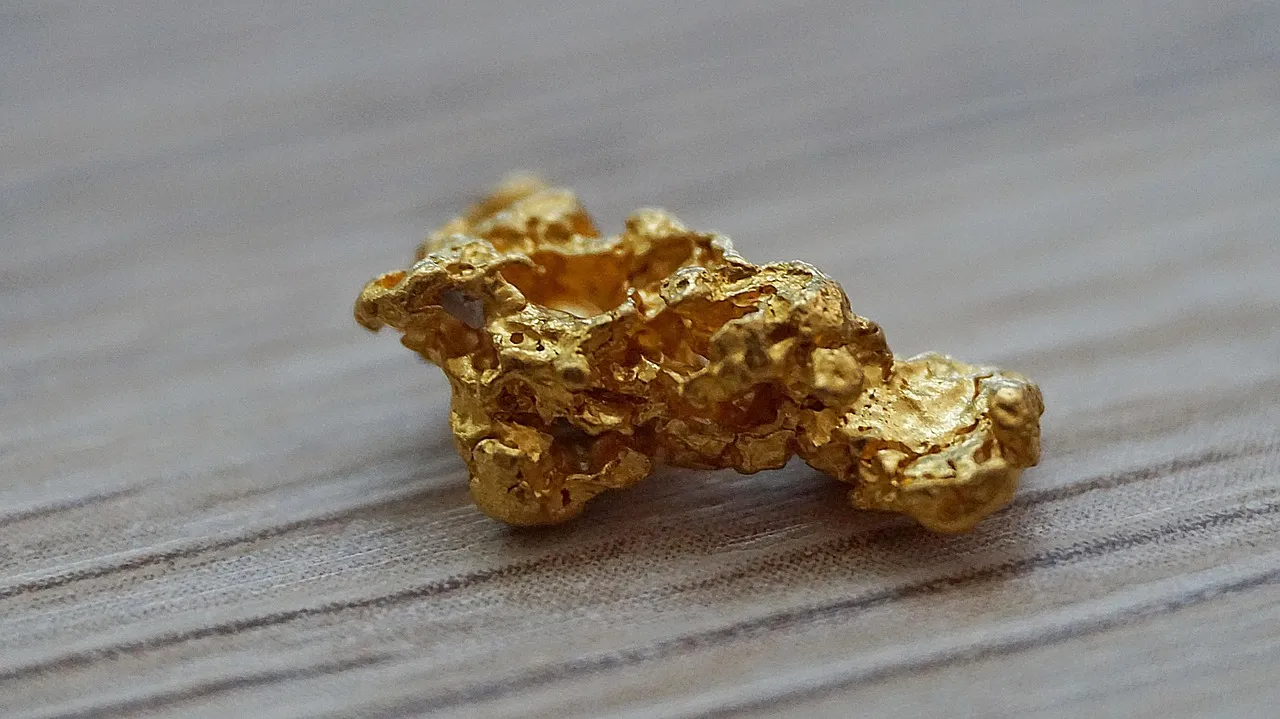
Why a ring is rarely pure gold
The Perth Mint says pure gold is too soft for jewellery on its own, so it is mixed with other metals such as silver, copper and palladium, which make it stronger for daily wear and change its colour. How it describes each grade:
- 24-carat: soft and easily shaped, and very resistant to rust and tarnish; its main use is investment bars and coins.
- 22-carat: tougher than pure gold, used historically for gold sovereigns and also found in plain jewellery.
- 18-carat: three-quarters gold; the added metal makes it harder wearing and better at resisting scratches than pure gold, and the Perth Mint calls it suitable for fine jewellery.
- 14-carat and below: described by the Perth Mint as the typical grades for more common pieces.
Where the colours come from
The colour of gold jewellery comes from the metals mixed into it, and the proportions set the shade. The Perth Mint’s account of the common colours:
| Colour | Mixed with | Note |
|---|---|---|
| Yellow | Silver and copper | The ratio sets the warmth of the yellow; 22-carat yellow gold also holds traces of zinc. |
| White | White metals such as silver, nickel and palladium | Nickel is relevant to skin; see Metals and skin reactions. |
| Rose | The same metals as yellow, in other amounts | More copper than silver gives the pink; some call it red gold. |
| Green | Copper, silver and zinc | The shade varies with the mix. |
| Grey | Copper, silver, manganese or iron | Described by the Perth Mint as a subtle shade. |
| Black | Cobalt, or a plated surface of black rhodium or ruthenium | Made by more than one method, alloying or electroplating. |
The colour and the carat are separate questions: a carat says how much gold, the colour says what the rest is.
Where the word comes from
The Perth Mint traces “carat” through the Arabic qīrāṭ, the Greek keration and the Italian carato to the seeds of the carob tree, which served as a standard weight long before the word came to describe purity.
The carat at the counter
When a business tells you, in writing or out loud, that a ring is a certain carat and colour, the consumer guarantee that a product matches its description applies to what it said. A receipt has to name the product it is for, so asking for the carat and colour to be written on it keeps the description on paper. More on that in Buying a ring: your rights.